Perimenopause symptoms can start years before your periods stop, and they don’t always look the way you might expect. Plenty of women in their 40s put poor sleep, a shorter fuse or heavier periods down to a busy life, when changing hormones are part of the picture.
This guide covers the common signs of perimenopause, whether a perimenopause test can confirm it, what treatment looks like, and how a GP at our Surfers Paradise clinic can help you work out what is going on.
Perimenopause at a Glance
What It Is
The transition before menopause, when hormone levels rise and fall unevenly and your periods start to change.
When It Starts
Most often in your mid to late 40s, though some women notice changes earlier. The average age of menopause in Australia is around 51.
How Long It Lasts
Usually four to eight years. It ends 12 months after your final period, which is when you reach menopause.
What Is Perimenopause?
Menopause is a single point in time: the day you reach 12 months without a period. Perimenopause is the lead-up to it. During these years your ovaries make oestrogen and progesterone less predictably, so levels can be high one month and low the next. That unevenness is why symptoms often come and go rather than building steadily.
Menopause before 45 is called early menopause, and before 40 it is called premature menopause. If you are under 45 and noticing changes, it is worth talking to a GP sooner rather than later. Healthdirect also has a good plain-English overview if you want to read more.
Perimenopause Symptoms to Look Out For
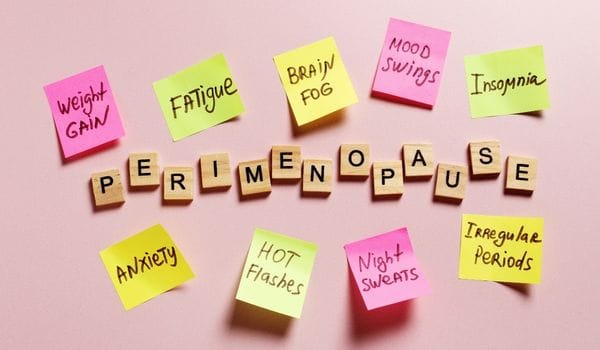
Every woman’s experience is different. Some notice very little, while others find perimenopausal symptoms affect their work, sleep and relationships. The most common include:
- Periods that become irregular, heavier, lighter or closer together
- Hot flushes and night sweats
- Trouble falling asleep or staying asleep
- Mood changes, irritability, anxiety or low mood
- Brain fog and trouble concentrating
- Joint and muscle aches
- Vaginal dryness or discomfort during sex
- Headaches, breast tenderness and changes in weight
Many of these overlap with other conditions, such as thyroid problems, low iron or depression. That is one reason a proper check-up is worthwhile, rather than assuming it is just hormones.
Early Signs of Perimenopause
The first change is often in your cycle. Periods may arrive a few days earlier than usual, get heavier, or skip a month altogether. Some women first notice they are waking at 3am, feeling more anxious than usual, or getting premenstrual symptoms they never used to have.
These early signs of perimenopause can show up in your early 40s, and sometimes in your late 30s. If your cycle changes and something doesn’t feel right, jot it down. A few months of notes makes the conversation with your GP much easier.
Is There a Perimenopause Test?
There isn’t a single blood test that confirms perimenopause. Because hormone levels swing from week to week, one result can look normal even when you are well into the transition. For most women over 45, a GP will diagnose perimenopause based on your age, your symptoms and how your periods have changed.
A perimenopause blood test can still be useful in some situations. Your GP may suggest hormone tests if you are under 45, and may also check your thyroid, iron levels, blood sugar or cholesterol to rule out other causes and get a clearer picture of your overall health. If testing is needed, your GP can arrange it through our on-site pathology service, so there is usually no need for a separate trip.
The Medicare Menopause Health Assessment
Since 1 July 2025, Medicare has funded a dedicated menopause health assessment for women going through perimenopause, menopause, early menopause or premature ovarian insufficiency. It is a longer GP appointment of at least 20 minutes, available once a year, with no age limit.
The appointment gives you and your GP time to cover:
- Your symptoms and how they are affecting daily life
- Your periods, medical history and family history
- Heart health, bone health and emotional wellbeing
- Contraception, which you still need until your GP says it is safe to stop
- The treatment options that suit you
When you book, mention that you would like a menopause health assessment so reception can set aside enough time. You can also check whether your appointment can be bulk billed.
When to See a GP Promptly
Changes to your cycle are expected during perimenopause, but some bleeding is not. Book an appointment soon if you have very heavy bleeding, periods that last much longer than usual, bleeding between periods or after sex, or any bleeding after menopause. These need checking, even if they turn out to be nothing serious.
Perimenopause Treatment Options
The right perimenopause treatment depends on your symptoms, your health history and what matters most to you. Some women mainly want relief from night sweats so they can sleep, while others are more worried about mood or heavy periods. Your GP can talk you through the benefits and risks of each approach.
Lifestyle Changes
Regular exercise, strength training, good sleep habits and cutting back on alcohol can ease symptoms and protect your heart and bones.
Hormone Therapy
Menopausal hormone therapy is an effective option for many women. Whether it suits you depends on your age, symptoms and medical history.
Non-Hormonal Options
There are also non-hormonal treatments and practical steps for hot flushes, sleep, mood and vaginal dryness.
If mood changes are a big part of what you are dealing with, a GP mental health care plan can give you access to Medicare-subsidised sessions with a psychologist. Midlife is also a sensible time for a heart health check, because the risk of heart disease rises after menopause. If weight gain is bothering you, our weight management service can help you set realistic goals.
Getting Ready for Your Appointment
A little preparation helps you get the most out of your visit:
- Keep a symptom diary for two or three months, including your periods
- Note anything that makes your symptoms better or worse
- List your current medicines and supplements
- Write down any family history of heart disease, breast cancer, osteoporosis or early menopause
- Bring your top two or three questions
You are welcome to ask for a female GP when you book. You can see who works at the clinic on our Our Team page, and our guide to the health screenings every adult should have is a handy checklist to bring along too.
Menopause Care at My Doctors Clinic Surfers Paradise
If you have been looking for a menopause GP on the Gold Coast, perimenopause and menopause care is part of our women’s health clinic in Surfers Paradise. We are a bulk billing medical centre open seven days, so whether you have one nagging symptom or several, you can talk it through with a GP, arrange any tests you need and leave with a plan that fits your life.
World Menopause Day falls on 18 October each year, and it is a good reminder that none of this is something you have to just put up with. You can book an appointment online or call us on (07) 5592 2299. For directions and opening hours, visit our contact page.
Perimenopause FAQs
Perimenopause most often starts in your mid to late 40s, although some women notice changes in their early 40s. The average age of menopause in Australia is around 51.
Usually around four to eight years. It ends 12 months after your final period, which is when you have reached menopause.
There is no single test that confirms it. For women over 45, a GP usually diagnoses perimenopause from symptoms and changes to your periods. Blood tests may be used if you are under 45, or to rule out other causes such as thyroid problems or low iron.
Yes. Pregnancy is still possible until menopause is confirmed, so keep using contraception until your GP says it is safe to stop.
It is a longer GP consultation of at least 20 minutes, available once a year, for women going through perimenopause, menopause, early menopause or premature ovarian insufficiency. It covers your symptoms, your overall health and your treatment options.
No. You can book directly with one of our GPs. If you need specialist care, your GP can arrange a referral.
Yes. Just ask for a female GP when you book online or call reception on (07) 5592 2299.
This article is general information only and is not a substitute for advice from your own doctor. If you have symptoms that worry you, please book an appointment with a GP. In an emergency, call 000.